First week as a full-time archaeology creator? | 29 May 2026
I have been meaning to start a weekly* newsletter since the start of the year; however, with one excuse after another, I finally had the time to sit down and write one today. It does feel like a fitting week for it, as I am deciding this is my first week as a full-time creator. Why this week? I have been creating content on and off for over four years now, but this year is where I have hit my stride in my personal archaeology content creation. I have also now been employed part-time for seven months as a digital content creator for a heritage organisation. Finally, this week on Monday is when I submitted my Semester 2 assessments for my MSc in Digital Heritage, so I have more free time now to dedicate to content creation. My degree doesn’t quite finish until 1 Sep, when my dissertation is due. However, I now feel my life has moved past university, and this ‘mindset shift’ as a full-time archaeology creator is what I need for whatever this next stage is. Therefore, this week is my first week as a full-time archaeology creator, despite this week being pretty similar to the one before, and probably the one coming.
*weekly is an aim, but I know what I am like.
Thank you for indulging me in a rather rambly introduction where I justify my choice for this particular day to start a newsletter that hardly anyone, but me, will read. If you are stumbling across this and have no idea who I am, let me introduce myself. I am Louise, and I @louisearchaeology post archaeology content exploring the distant past of Britain & beyond on Instagram, YouTube, TikTok and Facebook. This newsletter aims just to provide some rambly archaeology updates.
Content Update
This week I posted Episode 1 of my brand new series, The Time Traveller’s Guide to the Neanderthals. Releasing every other week on YouTube, this is a 10-part series on everything Neanderthal, preparing you for a trip to the Palaeolithic to visit our closest ancient human relatives. Episode 1 is your introduction: who Neanderthals were, what they looked like and where you might find them.
Over on socials, there will be some lovely supporting posts over the next 20 weeks, so what is not to love!
Digging Deeper
My favourite aspect I was researching about for this video was in the latter half, where I go through a range of Neanderthal destinations from west to east, demonstrating their almost 7,000 km range from the Iberian coast to the Altai Mountains in Southern Siberia. It is the Iberian coast I want to revisit for this week’s digging deeper.
Around 80,000 years ago, a man and two children were walking along the slopes of sandy dunes. 26 of their footprints across five trackways survived into modern days and provide a rare glimpse into a single moment in time for a Neanderthal family. The adult male Neanderthal stood at around 5ft6 to 5ft8 tall (1.69-1.73 m), slightly above the average height of 5ft5. One of the children he was walking with was between 7 and 9 years old, and the other was just a toddler, likely a little over a year old.
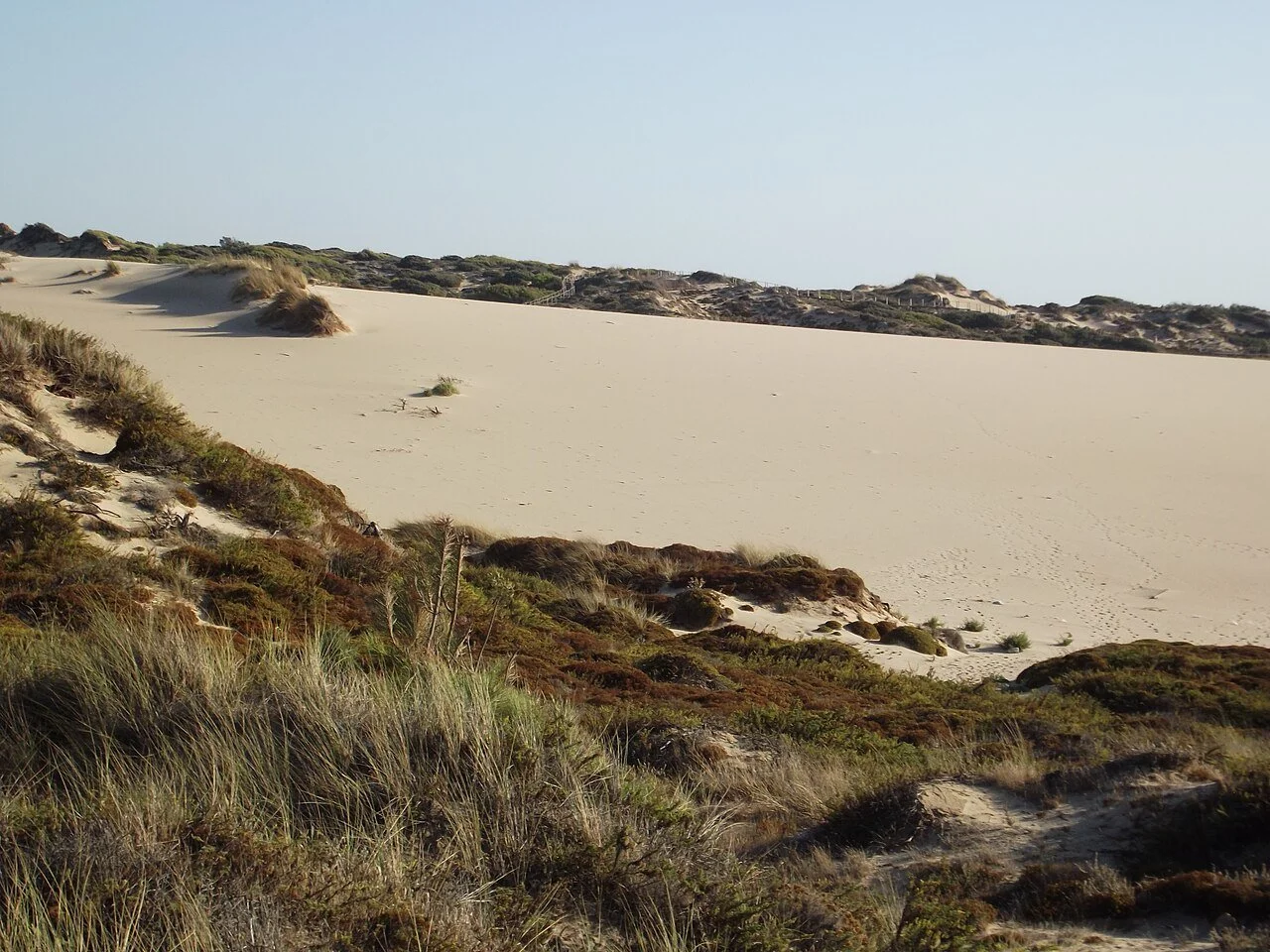
By Roundtheworld - Own work, CC BY-SA 4.0, https://commons.wikimedia.org/w/index.php?curid=61870805
The dunes would have provided an opportunistic hunting environment, which these Neanderthals were certainly aware of. Several of their footprints cross with contemporary tracks of a red deer, suggesting they were hunting, stalking or ambushing prey in the dunes. The children were involved in this, perhaps learning about strategies, suggesting hunting was a part of their lives from early childhood.
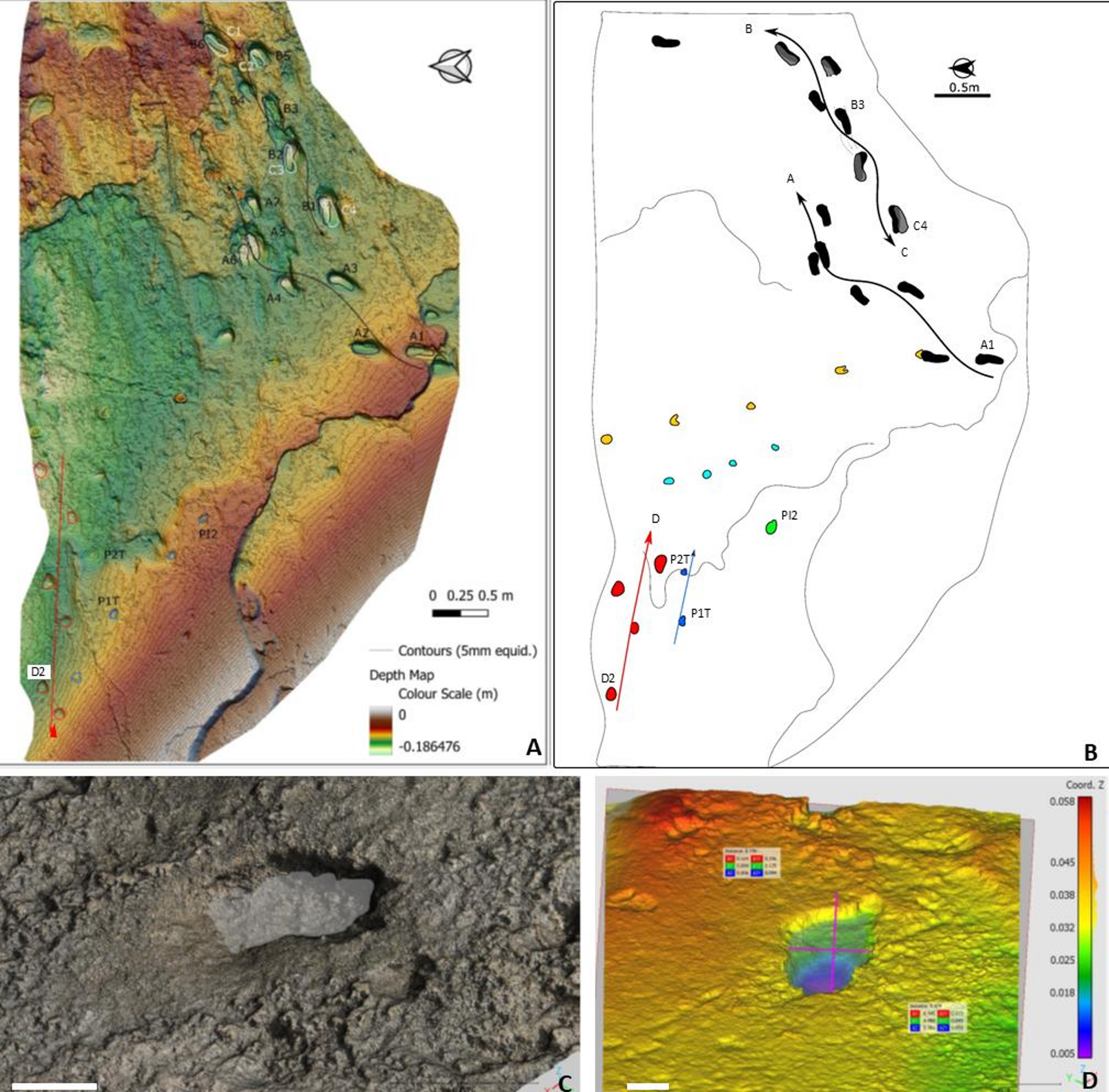
Photogrammetric models from the main track-bearing surface from Monte Clérigo. ( de Carvalho et al. 2025, Fig. 5).
Other Iberian sites reveal that coastal Neanderthals were incredibly adaptable. Their diet relied on deer, horses and hares, but they would incorporate local food sources too, suggesting a depth of knowledge of local nature. For a species that is frequently imagined as living in the cold in caves, sites like this reveal a different picture. Here we see a group raising children, living along the coast, and cleverly exploiting its resources with the Atlantic Ocean as the background.
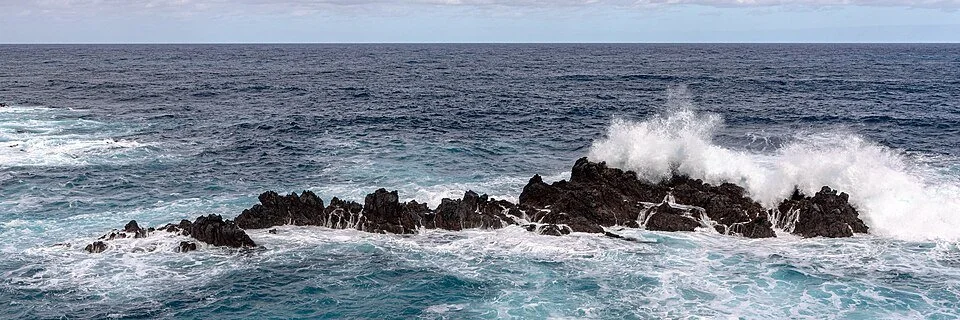
By Dietmar Rabich, CC BY-SA 4.0, https://commons.wikimedia.org/w/index.php?curid=180062267
The paper is open access on Nature: de Carvalho, C.N., Cunha, P.P., Belo, J. et al. Neanderthal coasteering and the first Portuguese hominin tracksites. Sci Rep 15, 23785 (2025). https://doi.org/10.1038/s41598-025-06089-4
Archaeology News
Here is where I discuss or list any archaeology news that caught my eye. I am still figuring out this section of the newsletter.
A medieval well that was once a water source inside the walls of Sheffield Castle was surveyed by a drone!
In Northern China, researchers identified the ancient liquid in a Qin bronze vessel, dated to 475-221 BC. The liquid was a cereal-based alcoholic beverage made from broomcorn millet and Triticeae, which demonstrates sophisticated brewing knowledge!
Recommendations
I got Forza Horizon 6 (a driving game), and it has been great so far. I have loved ‘driving’ around Japan, so when I do a series on the Archaeology of Japan, you know why.
More video games (I promise I'll go outside), I just downloaded and have played about an hour of Paralives, a life sim game, that is looking like it might rival Sims.
Olivia Rodrigo’s new music and the Bleachers’ new album have been on repeat.
I got some more Sauce Shop sauces, and they have all been delightful.
Taskmaster Series 21 continues to be delightful, and I have been watching Veep because of it!
(Let me know if there is a more structured way to do this part :) )
